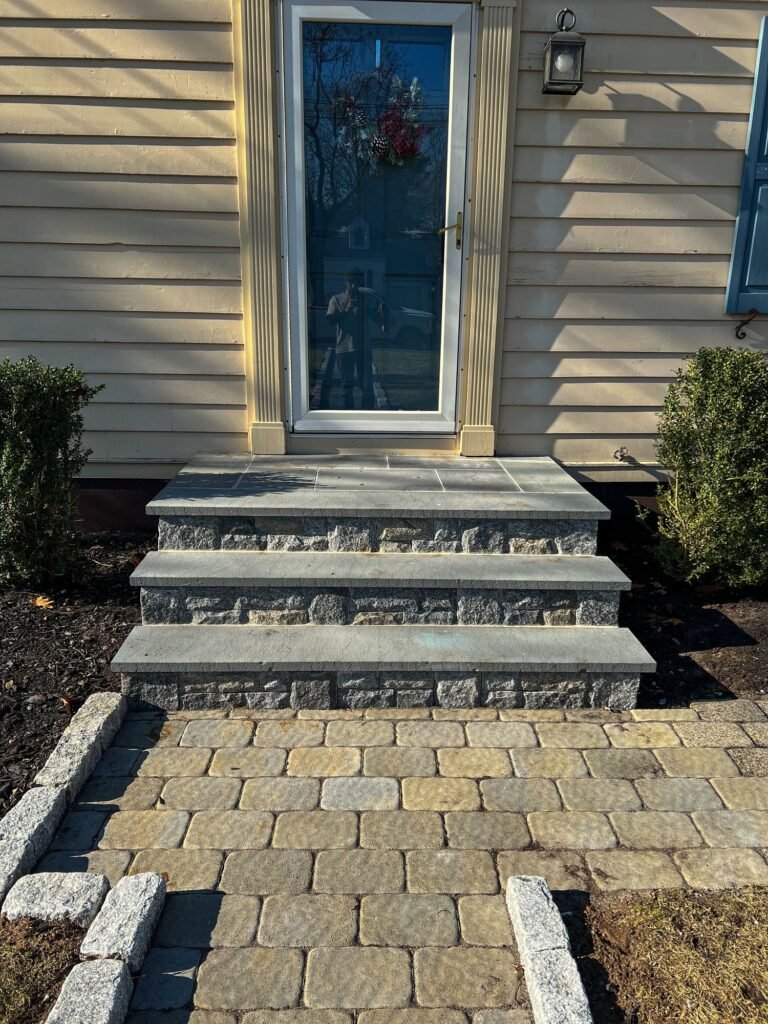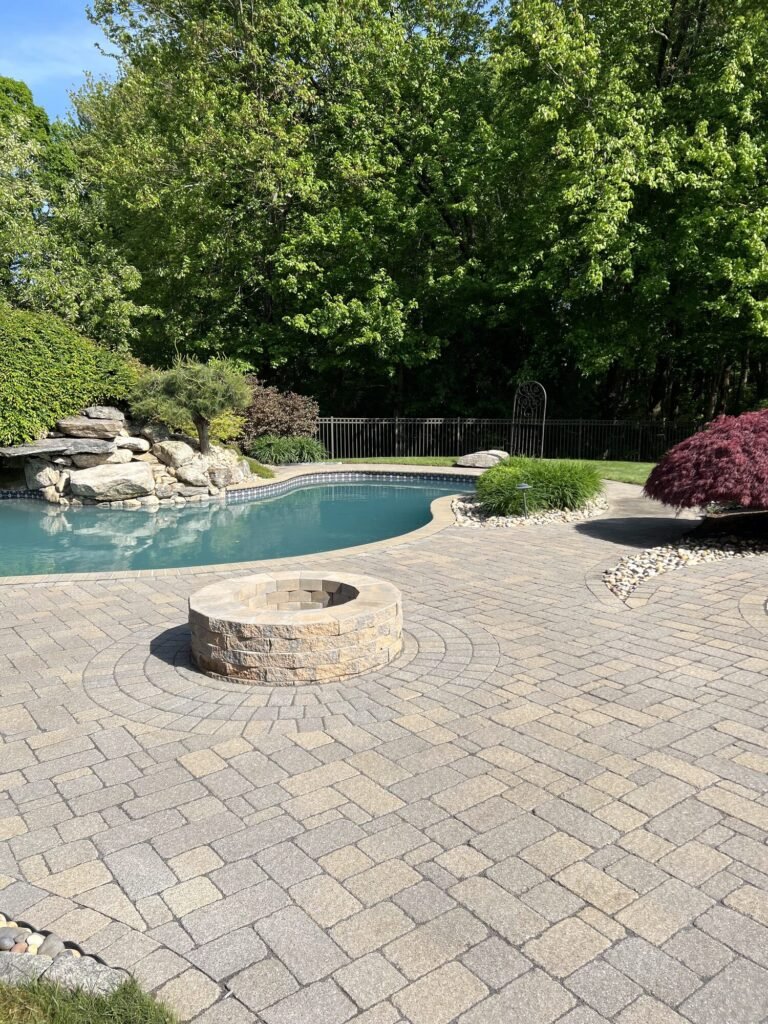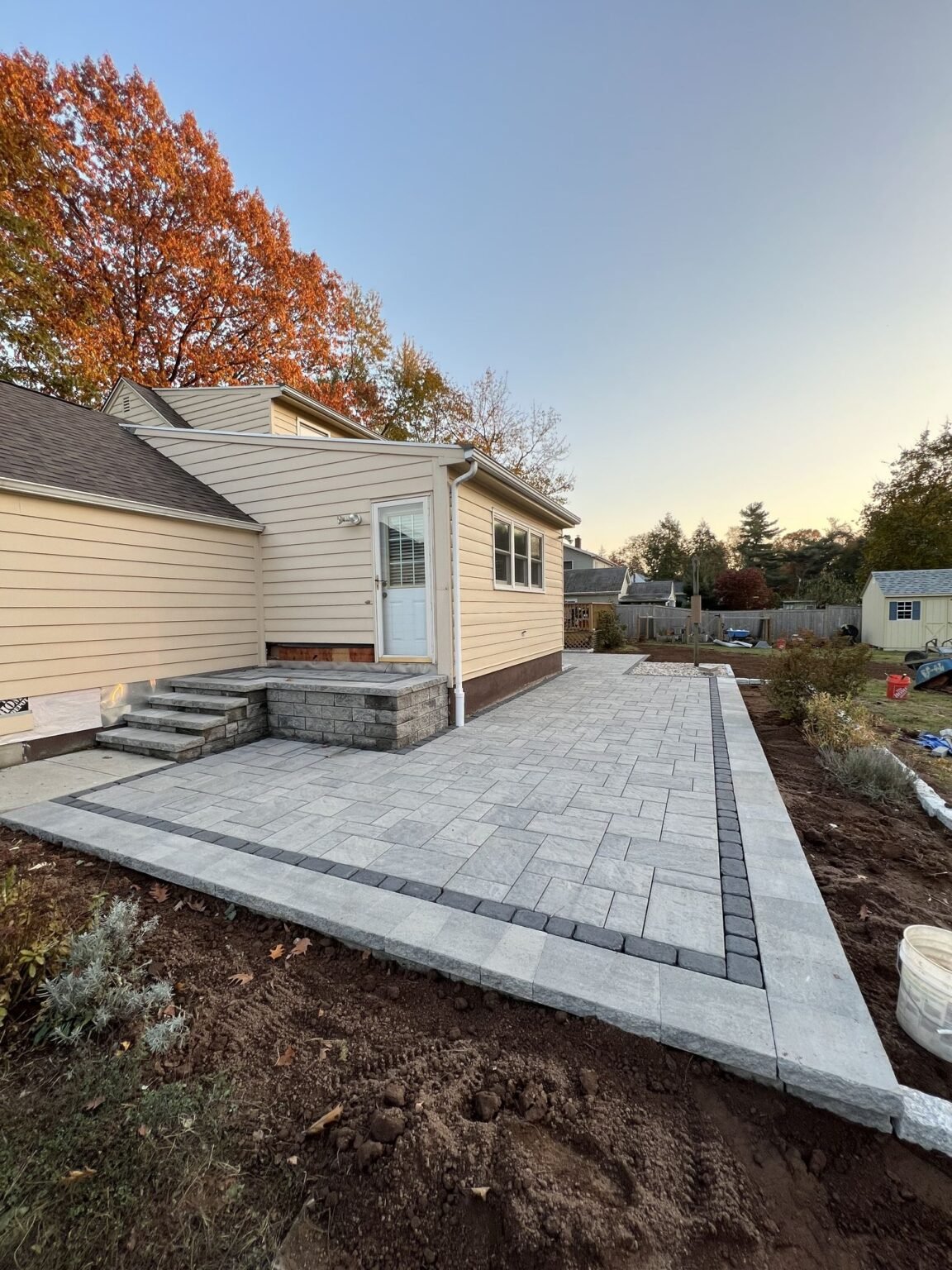
If you’re replacing an old patio or building a new one, the first decision is usually pavers or poured concrete. Concrete costs less up front. Pavers cost more, but they handle Connecticut winters differently and are much easier to repair. Here’s how the two compare.
How they’re built
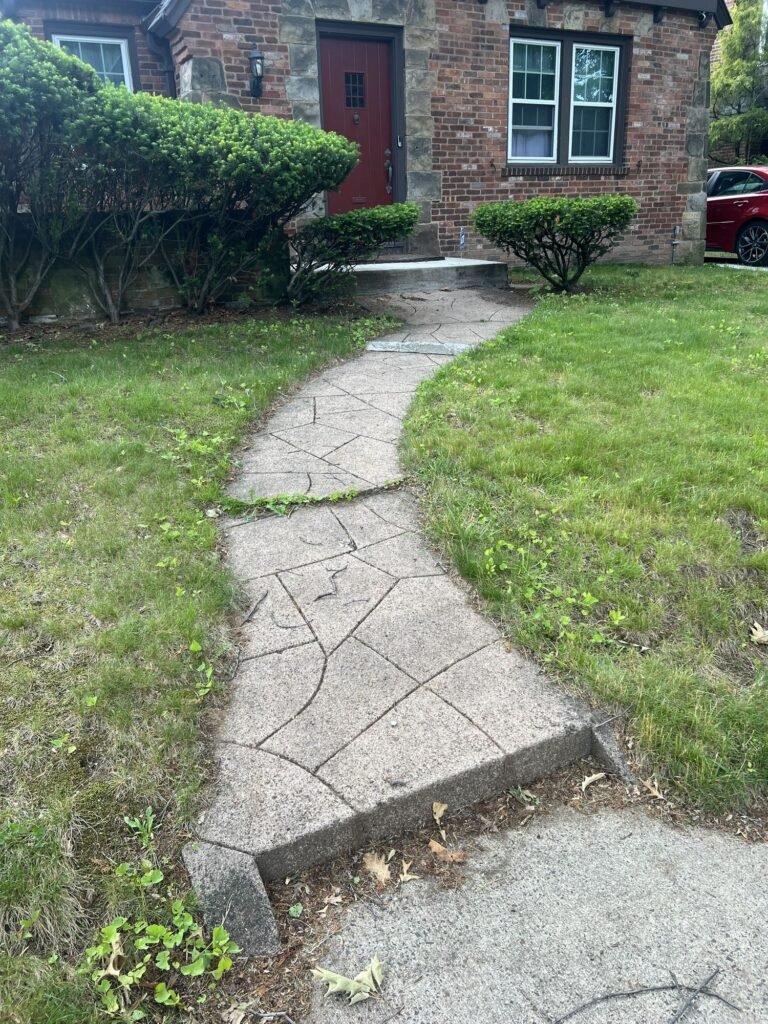
A poured concrete patio is one solid slab. When the ground under it moves, or the concrete shrinks as it cures, the slab cracks. Control joints are cut in so it cracks in straight lines where you expect, but it will crack.
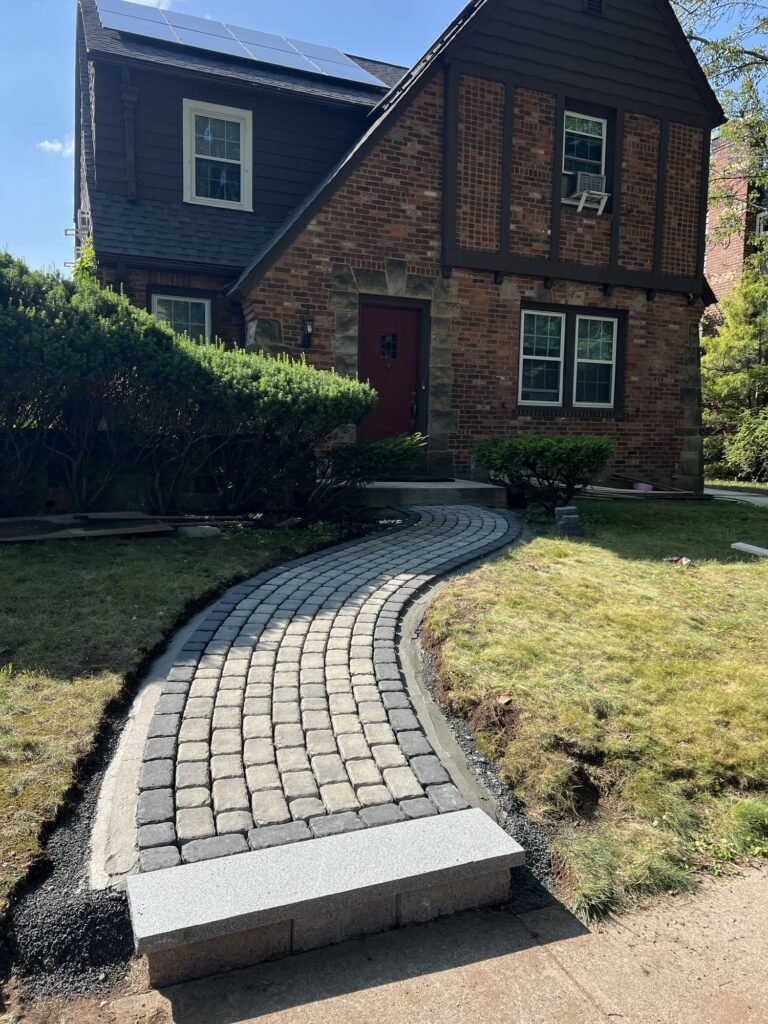
A paver patio is made of individual units set on a compacted gravel base, with sand in the joints. The joints let the surface flex slightly as the ground moves through freeze-thaw cycles instead of cracking. Concrete pavers are also made to a demanding standard: ASTM C936 requires an average compressive strength of at least 8,000 psi and water absorption no higher than 5 percent.
Cracking and repairs
This is the biggest practical difference. When part of a concrete patio cracks, heaves or sinks, you can patch it, but the patch rarely matches, and a badly heaved slab has to be broken out and replaced.
When part of a paver patio settles, the pavers in that area can be lifted, the base corrected and the same pavers put back. A stained or chipped paver can be swapped out. That’s why paver patios can be restored instead of replaced. See paver restoration and repairs.
Winter and deicing salt
New concrete is sensitive to salt. Industry guidance on scaling, the flaking of a concrete surface, says not to use deicing salts such as calcium or sodium chloride in the first year after concrete is placed, and that concrete exposed to freezing and thawing must be air-entrained.
Pavers made to ASTM C936 are tested for freeze-thaw durability when they’ll be exposed to deicers. Techo-Bloc states that sodium chloride and calcium chloride won’t harm its standard paving stones, and its residential warranty covers surface deterioration from rock salt. Pavers can be shoveled and plowed like concrete; Techo-Bloc suggests making sure a plow contractor uses Teflon blades to avoid scratching.
Look and design options
Concrete can be colored, stamped or textured, but it’s still one slab. Pavers come in a wide range of shapes, sizes, colors and textures, from cobblestone to large-format slabs, and can be laid in patterns with borders and inlays. See our guide to Techo-Bloc colors, textures and styles.
Maintenance
Concrete needs crack sealing over time. Pavers need their joints kept full of sand, and some homeowners choose to seal them every few years for color and stain resistance. Techo-Bloc considers sealing optional. Our paver maintenance guide explains what’s involved.
Cost
Concrete usually costs less to install than pavers. Pavers cost more because of the deeper base, the cutting and the labor of setting each unit. Most paver patios we build run about $25 to $35 per square foot installed, depending on size, access, design and materials. Our patio cost guide shows typical prices by size.
When you compare quotes, compare them over the life of the patio, including repairs, and not just on the day it’s installed.
Which is right for you?
- Choose concrete if the lowest up-front price matters most and you’re comfortable with eventual cracking.
- Choose pavers if you want more design options, a surface that flexes with freeze-thaw, simpler repairs and a manufacturer’s lifetime warranty on the material.
Common questions
Do paver patios crack?
Individual pavers rarely crack under normal use because the joints let the surface move. Problems with paver patios usually come from the base, showing up as low spots or shifting, and those can be repaired.
Can pavers go over an existing concrete patio?
In some cases, if the slab is sound, drains well and leaves enough height at doors and steps. Otherwise we remove the slab and build a proper gravel base. See why base preparation matters.
How long does a paver patio last?
Built on a proper base and maintained, a paver patio can last for decades. Techo-Bloc backs its residential pavers with a transferable lifetime product warranty.