Front steps take more abuse than any other part of a house’s exterior: daily foot traffic, snow shovels, ice melt and every freeze-thaw cycle Connecticut throws at them. Eventually they show it. The question is whether a repair will hold or whether it’s time to rebuild.
Signs your steps need attention
- Loose or rocking treads, caps or stones
- Cracks through concrete treads or risers
- Crumbling or missing mortar joints
- Steps that have settled, tilted or pulled away from the house
- Water pooling on treads or the landing
- Risers of different heights that catch people’s feet
- Railings that are loose because the masonry around them is failing
When a repair makes sense
Repairs are usually worth it when the problem is on the surface and the structure underneath is sound:
- A few loose treads or caps that can be reset
- Isolated loose stones in a veneer face
- Mortar joints that need repointing
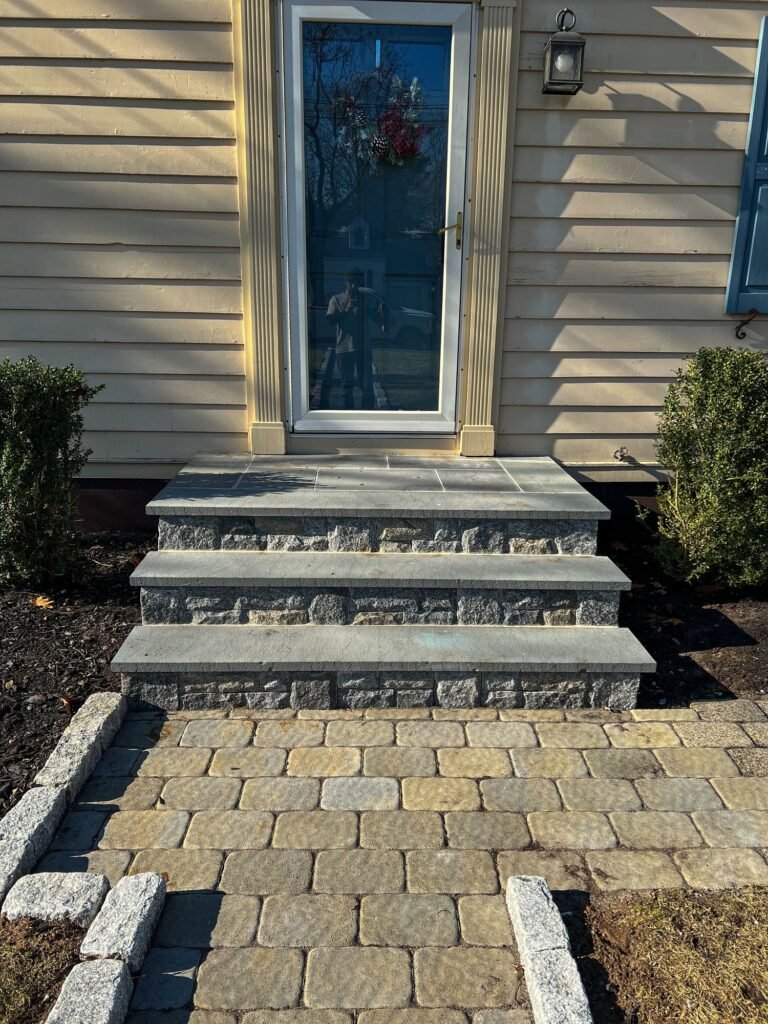
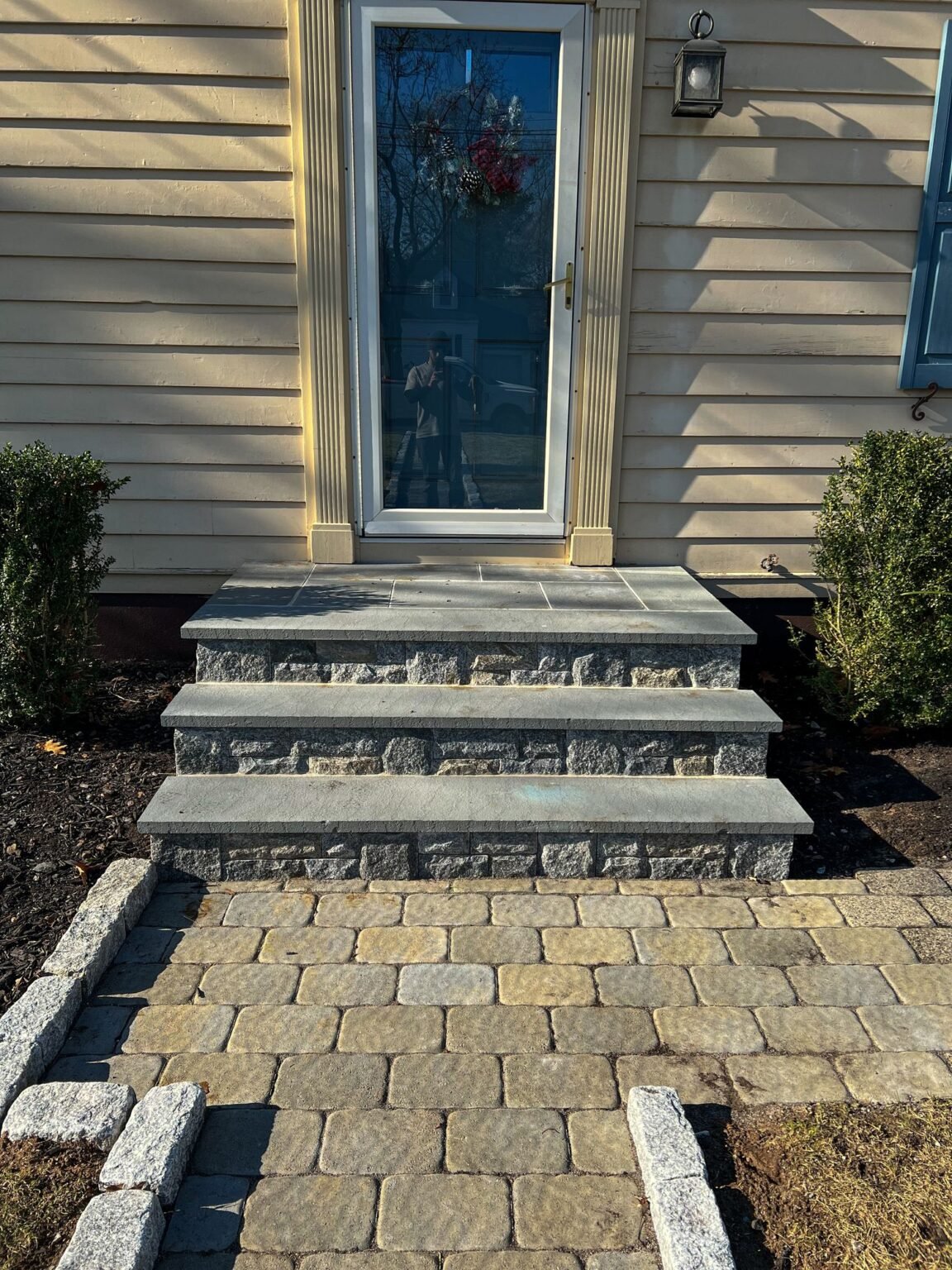
- Concrete that’s structurally sound but worn or stained, which can often be refaced with stone veneer and new bluestone treads
Refacing keeps the existing structure and changes the finish. It only works if the core of the steps isn’t moving.
When replacement is the better investment
Replacement makes more sense when the steps themselves are failing:
- The steps have settled, tilted or separated from the house
- Cracks run through the structure, not just the surface
- Riser heights are uneven or treads are too shallow to be safe
- Water is getting into the structure and freezing, so repairs keep failing
- You’re redoing the walkway or entrance anyway
In those cases we remove the old steps, build on a new compacted base and set new treads and risers at even heights.
What safe steps look like
Connecticut’s residential building code is based on the 2021 International Residential Code. For stairways, the IRC limits risers to 7¾ inches and requires treads at least 10 inches deep, with risers and treads in a flight varying by no more than 3/8 inch. A handrail is required on stairs with four or more risers. Your town’s building official has the final word on what applies to your project, and we check before we build.
Even risers matter more than people think. One step that’s a little taller or shorter than the rest is what trips people.
Material options for new front steps
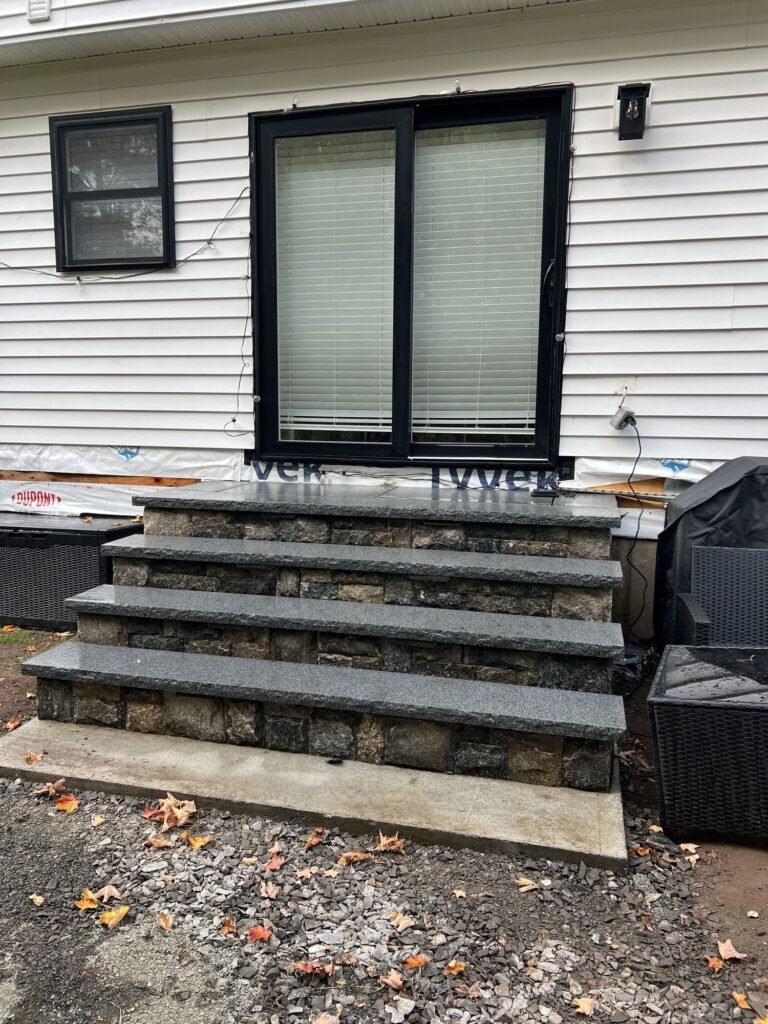
- Bluestone and stone veneer: bluestone treads over natural stone veneer risers, a classic look for Connecticut homes.
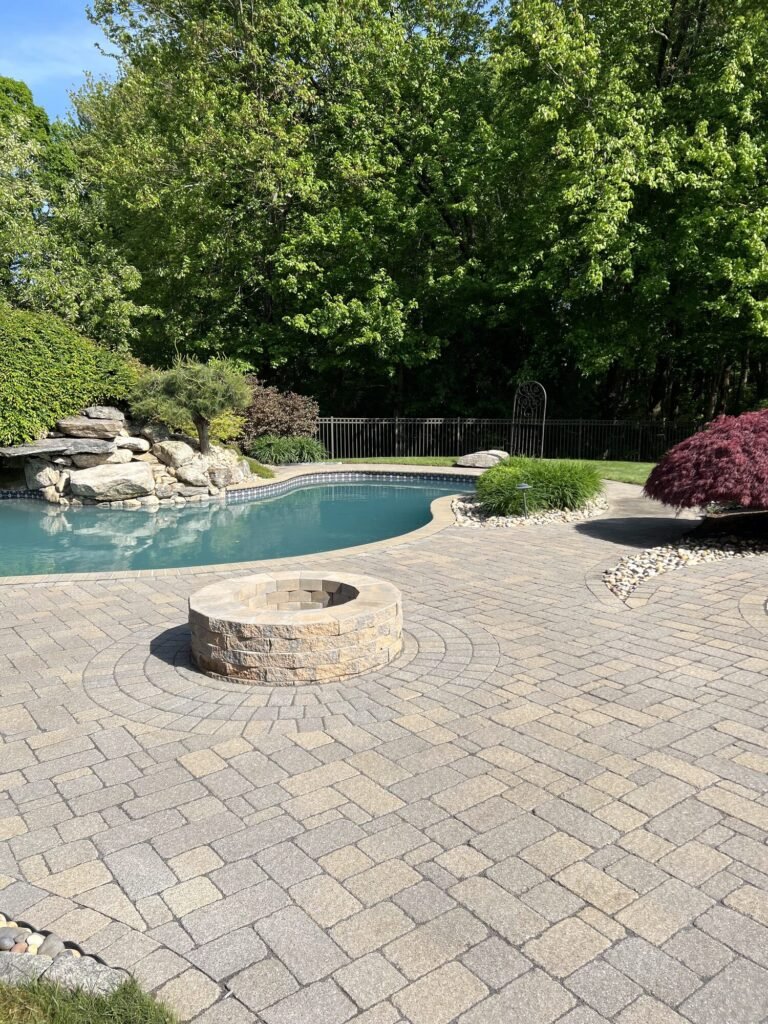
- Paver steps: paver or block steps that match a new paver walkway, often with lights built into the risers.
- Manufactured step units: solid steps from manufacturers like Techo-Bloc, whose step lines include Raffinato, Borealis and York.
Don’t forget the landing and walkway
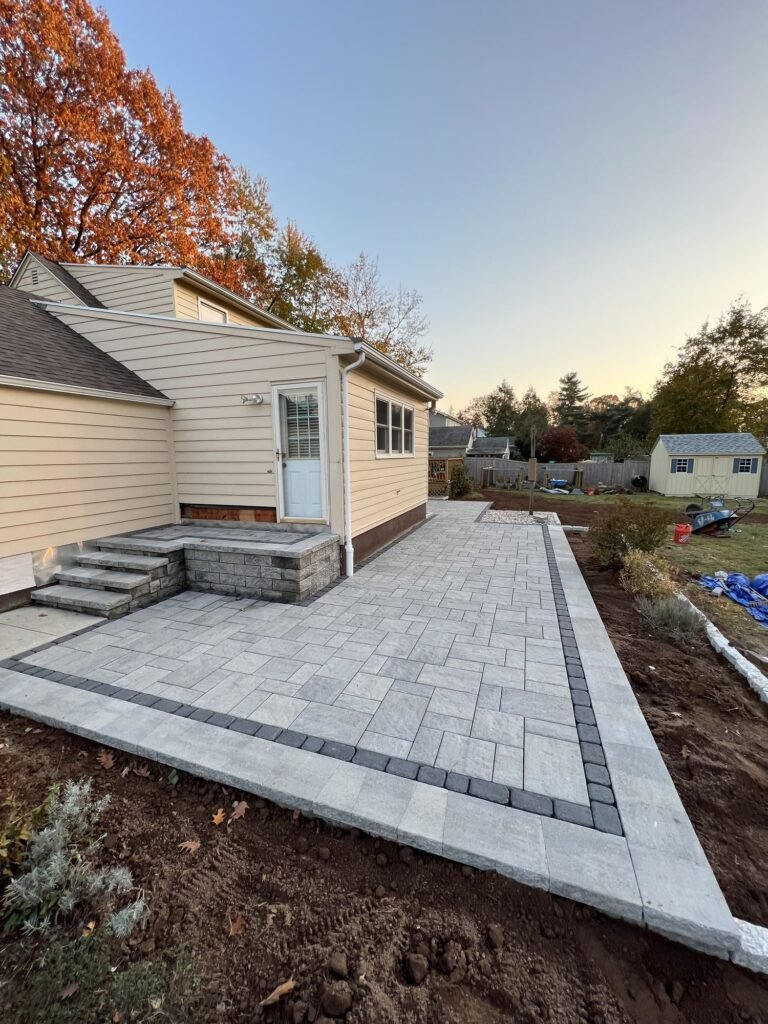
New steps can look out of place next to an old cracked walkway. If the walk is failing too, doing both at once lets us match materials and set the grades so water runs away from the house. See our walkway installation page and walkway cost guide.
Our approach
We start by finding what’s causing the problem: settlement, water or a failing structure. If a repair will hold, we’ll tell you. If it won’t, we’ll explain why and show you replacement options in 3D. Learn more on our front steps and restoration and repairs pages.
Common questions
Can concrete steps be refaced with stone?
Often, yes, if the concrete is sound and not moving. We add stone veneer to the risers and new bluestone or stone treads.
Do I need a permit to replace front steps?
It depends on the scope of the work and your town, so we check with your building department before we start.
Can you add lights to new steps?
Yes. Low-voltage step lights can be built into the risers as the steps go in. See our landscape lighting page.