Paver patios don’t need much, but they do need some attention. A little maintenance keeps the joints tight, the color rich and small problems from turning into repairs. Here’s what we recommend, based on manufacturer guidance and what we see on Connecticut patios.
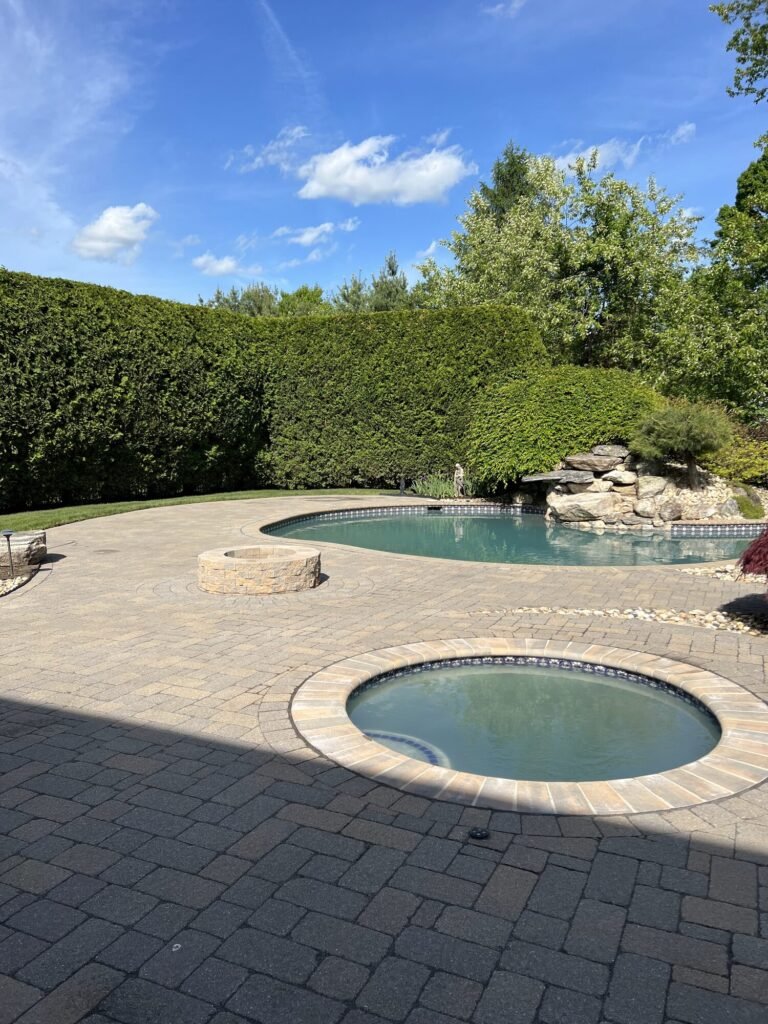
Routine cleaning
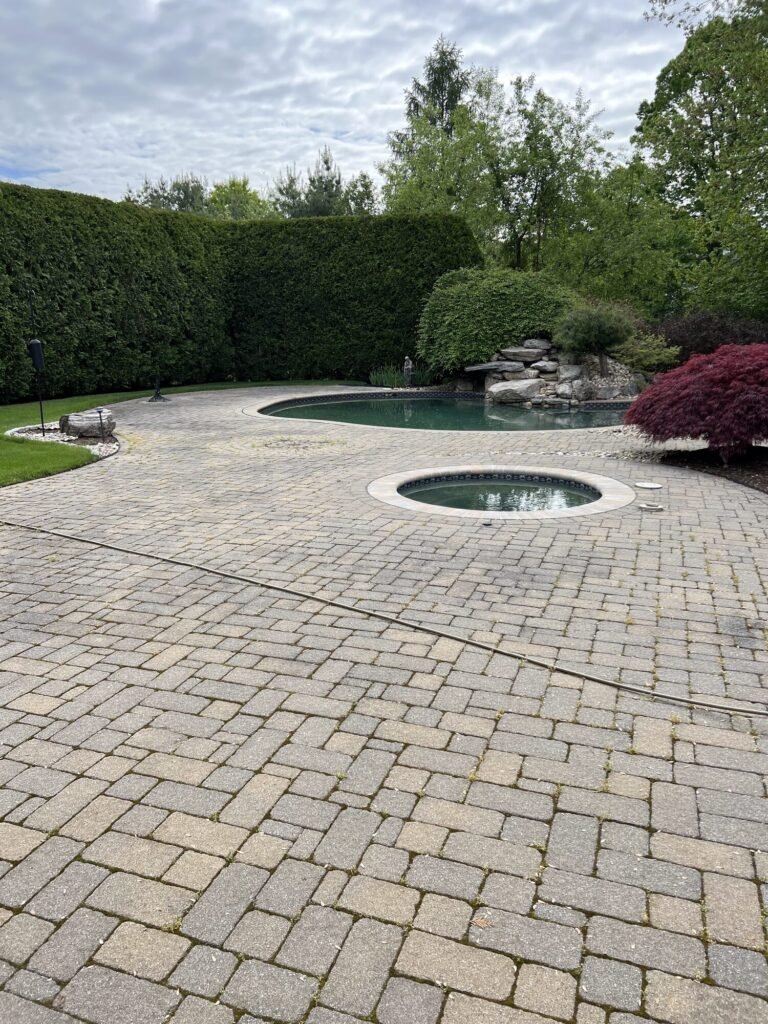
Sweep regularly and rinse with a hose. For stubborn stains, use a cleaner made for concrete pavers rather than household products.
A pressure washer will pull sand out of the joints, so any joints it empties need to be refilled afterward. That’s the main reason pressure washing and re-sanding usually go together.
White haze: efflorescence
A whitish film on new pavers is usually efflorescence: mineral salts carried to the surface by water. Techo-Bloc says it’s a natural process in concrete products, isn’t a defect or harmful, and usually fades on its own within six months to a year. If it doesn’t, an efflorescence cleaner removes it; Techo-Bloc lists FlexLock, Techniseal and Alliance Gator among recommended cleaners.
Moss and weeds
Moss grows in damp, shaded areas. Techo-Bloc suggests a solution of 10 parts water to 1 part chlorine bleach to remove it, and notes that a lasting fix means correcting the moisture. Weeds in the joints usually mean the joint sand has washed out or was never filled fully.
Re-sanding the joints
Polymeric sand hardens after it’s misted with water and helps keep weeds and ants out of the joints. Over time, especially after pressure washing or where water runs across the patio, the sand washes low and needs to be replaced.
When joints are redone, Techo-Bloc recommends removing about 1 to 1½ inches of the old sand first, without disturbing the bedding layer underneath. New polymeric sand is swept in, compacted and misted to activate it, following the manufacturer’s instructions. Weather matters: products like Alliance’s Gator Maxx sand call for dry pavers, temperatures above freezing and a rain-free period after activation.
Sealing: optional, but popular
Sealing pavers is optional. Techo-Bloc describes it as mainly aesthetic: it doesn’t change the quality of the paver, but it can enrich the color and make stains easier to clean. If you want to seal:
- Wait at least a year after a new installation so the pavers finish curing, as Techo-Bloc recommends.
- Clean first, including any efflorescence.
- Plan on resealing every three to five years, which Techo-Bloc says is typical for sealers.
- Seal in dry weather so the sealer can cure.
Snow, ice and salt
Pavers can be shoveled and plowed like concrete. Techo-Bloc says sodium chloride and calcium chloride won’t harm its standard pavers, with its wet-cast Stonedge line the exception, and suggests making sure a plow contractor uses Teflon blades.
When maintenance becomes repair
Low spots, rocking pavers, edges that have spread or joints that empty every spring usually point to the base, not the surface. Those areas need the pavers lifted, the base corrected and the pavers reset. See why base preparation matters.
Our cleaning, re-sanding and sealing service
We power wash patios and walkways, replace the joint sand with fresh polymeric sand, reset low or heaved areas and apply sealer if you want it. See paver restoration and repairs for what’s included.
Common questions
How often should pavers be sealed?
If you choose to seal, Techo-Bloc says sealers typically need to be reapplied every three to five years.
Should new pavers be sealed right away?
No. Techo-Bloc recommends waiting at least one year after installation.
Why do weeds grow between my pavers?
Usually because the joint sand has washed out or settled low. Cleaning out the joints and refilling them with polymeric sand fixes it.